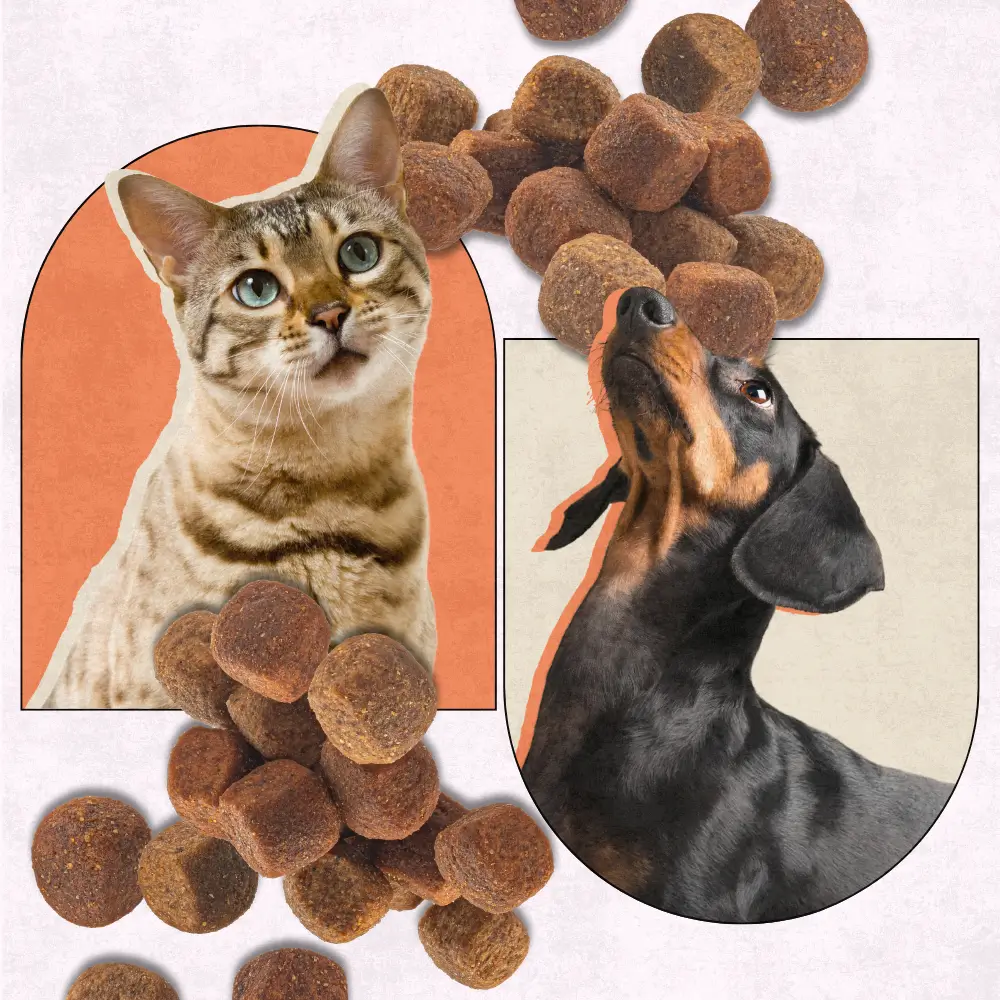
If you’ve ever owned both a dog and a cat, you already know this truth:
they may live under the same roof, but they are running very different operating systems.
Dogs are enthusiastic food interns.
Cats are discerning consultants with strong opinions and zero tolerance for nonsense.
And yet… we often make the mistake of feeding them like they’re the same. Same treats, same schedule, same logic.
Which feels fair! But nutritionally? Emotionally? Chaos!
So let’s break it down. Here are the most common feeding mistakes dog owners and cat owners make, why they happen, and how to avoid them.
Dog Feeding Mistakes (And Why They Happen)
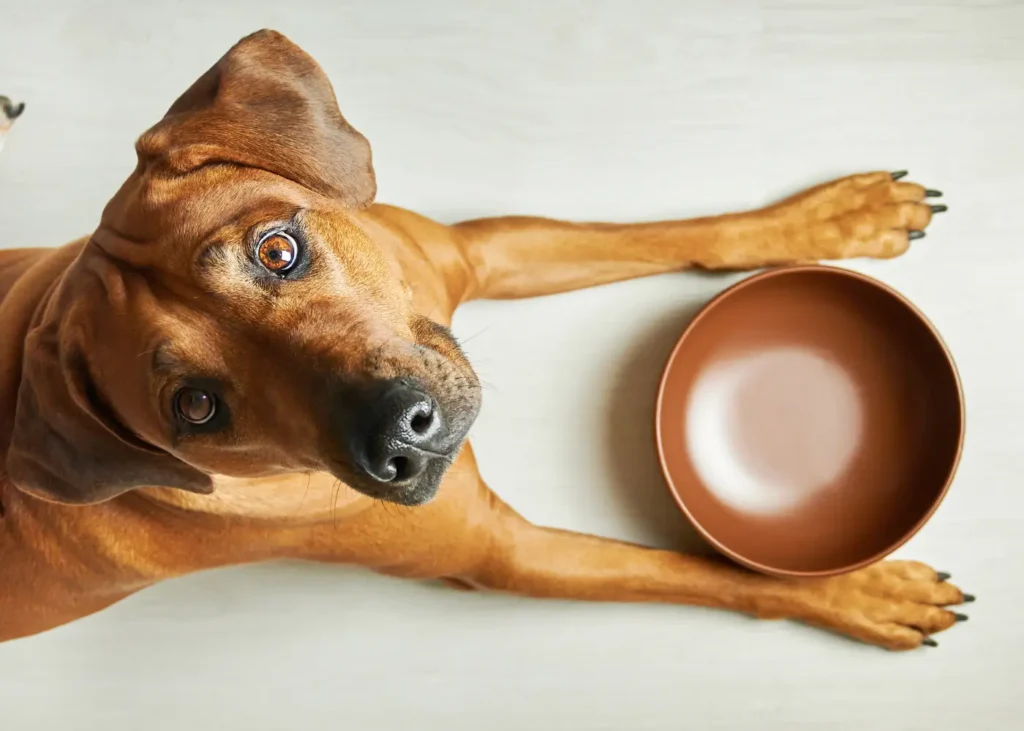
1. Overfeeding Because “They’re Active”
Dogs are very good at convincing us they need more food. The tail wag. The hopeful stare. The performance.
But many dogs get more calories than they actually burn, especially once puppy energy turns into adult nap enthusiasm.
Better approach:
Measure meals, monitor body condition, and adjust portions as activity levels change — not based on how convincing the eyes are.
EVERYONE’S CLICKING ON:
14 Dog Travel Essentials That Actually Make the Trip Easier (Not Just Look Good on a Packing List)
6 Senior Dogs Who Found Their Forever Home (And Why Adopting Older Pets Is So Underrated)
The Complete Guide to Feeding Your Dog: A Stage-by-Stage Breakdown
Why Do Dogs Lick Each Other’s Ears? (And When You Should Step In)

10 Best Dog Gadgets That Actually Make Life Easier (Not Just Cuter)
2. Treats Turning Into Meals
Training treats. Chews. “Just because” snacks. Suddenly half your dog’s calories are coming from rewards.
Better approach:
Treats should make up no more than 10% of daily intake. Break treats into smaller pieces or use kibble for training — your dog does not know the difference, I promise.
3. Table Scraps Becoming a Habit
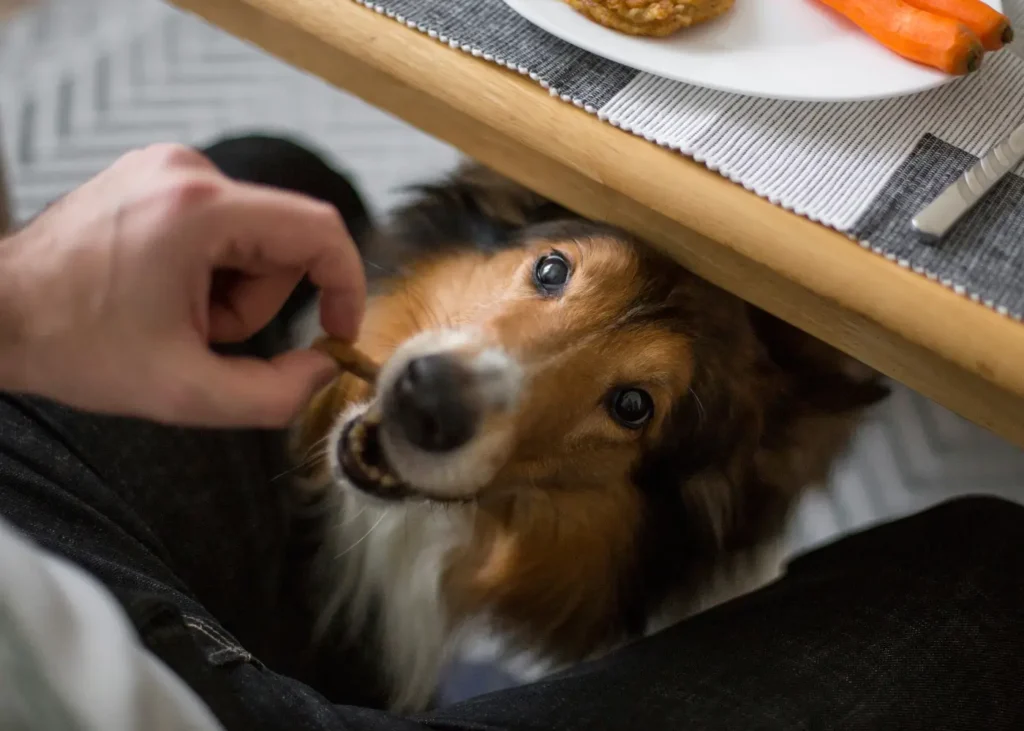
Sharing food feels like bonding. But dogs don’t understand moderation — or that some foods are unsafe.
Better approach:
If you share, stick to dog-safe foods and offer them in the bowl, not from the table. This helps prevent begging and keeps boundaries intact.
4. Free-Feeding Without a Plan
Some dogs do fine with free-feeding. Many do not. For those dogs, it can lead to overeating, picky habits, or unpredictable bathroom schedules.
Better approach:
Scheduled meals help dogs feel secure and make training easier. Structure = calm.
Cat Feeding Mistakes (And Why They’re Different)
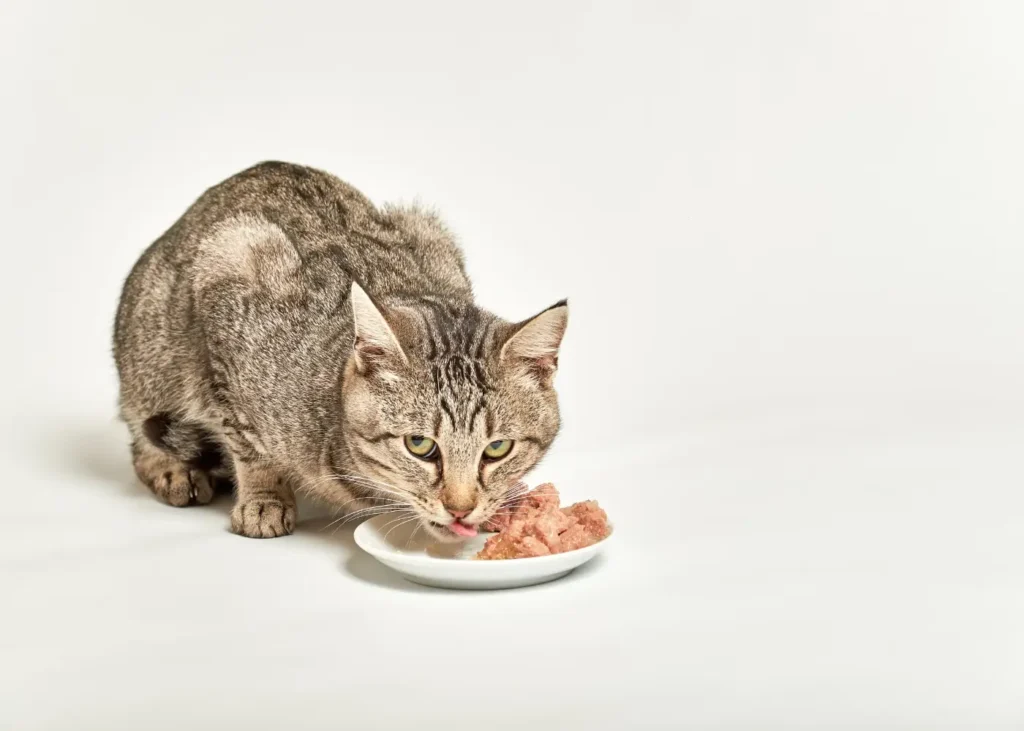
Cats are not small dogs. Say it louder for the people in the back.
1. Treating Cats Like Dogs at Mealtime
Dogs eat when you say “eat.”
Cats eat when it aligns with their personal philosophy.
Trying to force strict dog-style feeding rules on cats can cause stress, food refusal, or overeating later.
Better approach:
Cats often do best with smaller, frequent meals and quiet feeding spaces.
2. Ignoring Hydration
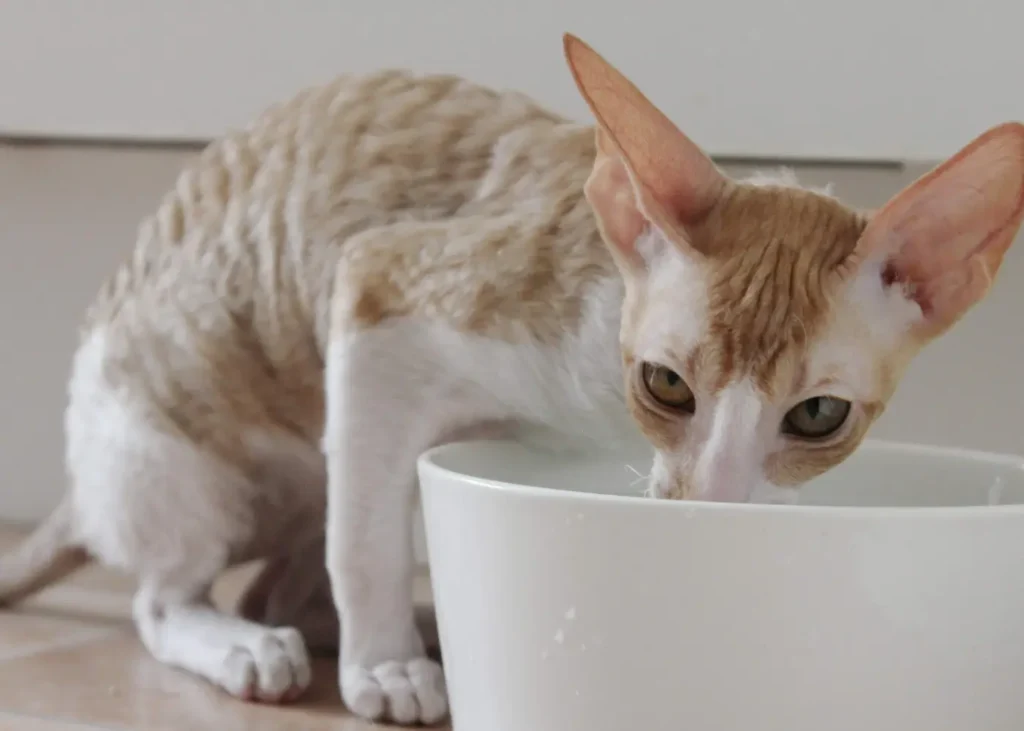
Cats are famously bad at drinking water — especially if they’re on dry food only.
Better approach:
Incorporate wet food when possible, refresh water daily, and consider water fountains (many cats prefer moving water).
3. Overlooking Stress-Related Picky Eating
Cats don’t usually skip meals for fun. Stress, environmental changes, or food bowl placement can all affect appetite.
Better approach:
If a cat stops eating, investigate calmly. Changes in routine, location, or household dynamics can all play a role.
4. Free-Feeding Without Monitoring
Free-feeding cats is common, but it can hide weight gain or appetite changes — especially in multi-cat households.
Better approach:
Track how much food is actually eaten, and watch body condition closely. Subtle changes matter with cats.
Shared Mistakes (Where Love Gets Us in Trouble)
1. Using Food as the Default Love Language
We love them, so we feed them. Treat them. Reward them. Feed them again.
Better approach:
Balance food rewards with play, enrichment, walks, brushing, and affection. Love isn’t measured in scoops.
2. Not Adjusting for Age or Lifestyle Changes
Puppy ≠ adult ≠ senior.
Kitten ≠ adult cat ≠ senior cat.
Better approach:
Reassess food type and portions as pets age, slow down, or develop health needs.
3. Ignoring Subtle Weight Changes
A pound or two doesn’t feel like much — until it adds up.
Better approach:
Regular weigh-ins and body condition checks help catch issues early.
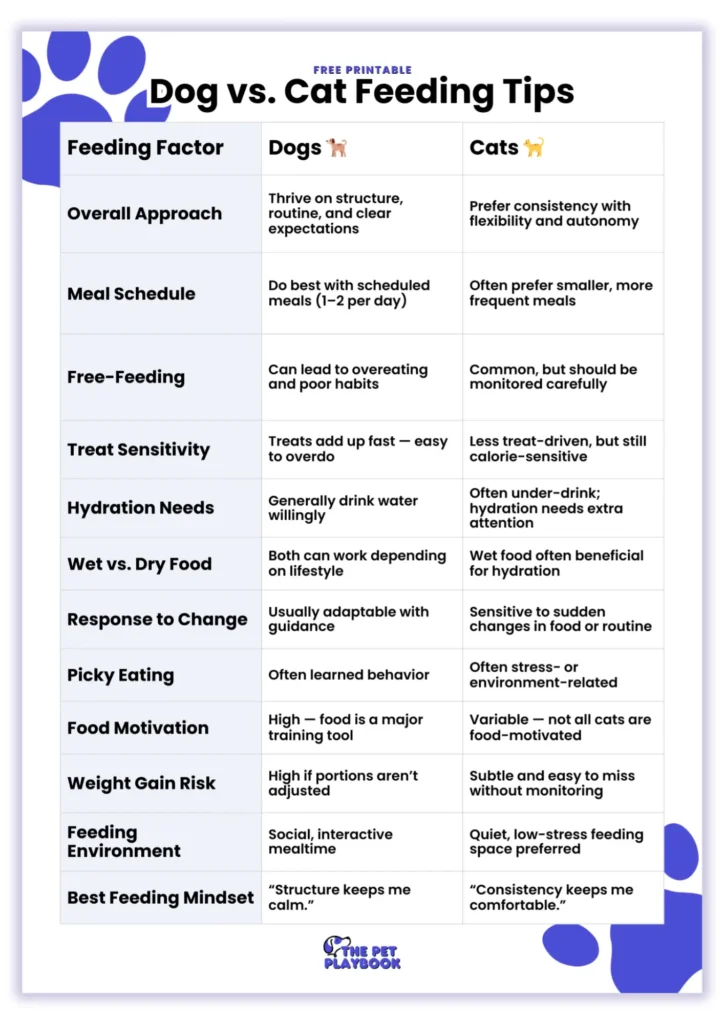
FREE Printable
Want to save this for later (or stick it on your fridge like a very responsible pet parent)?
Simply click on the image below — or hit the green download button beneath it — to grab your copy.
The Big Takeaway: Same Love, Different Rules
Dogs thrive on structure, routine, and enthusiastic participation.
Cats thrive on consistency, autonomy, and quiet confidence.
Feeding both well isn’t about doing more — it’s about doing what actually works for them.
So keep the love. Keep the treats (responsibly). Keep showing up and learning as you go.
You don’t need to be perfect. You just need to be paying attention — and honestly, if you’re reading this? You already are.
TRY THIS NEXT: 6 Vegan Dog Treat Recipes That Prove Dogs Don’t Need Dairy To Be Delighted